The Hidden Cost of Going It Alone: How Isolation Quietly Dismantles High Achievers—and Why a Home Wellness Ritual May Be the Antidote
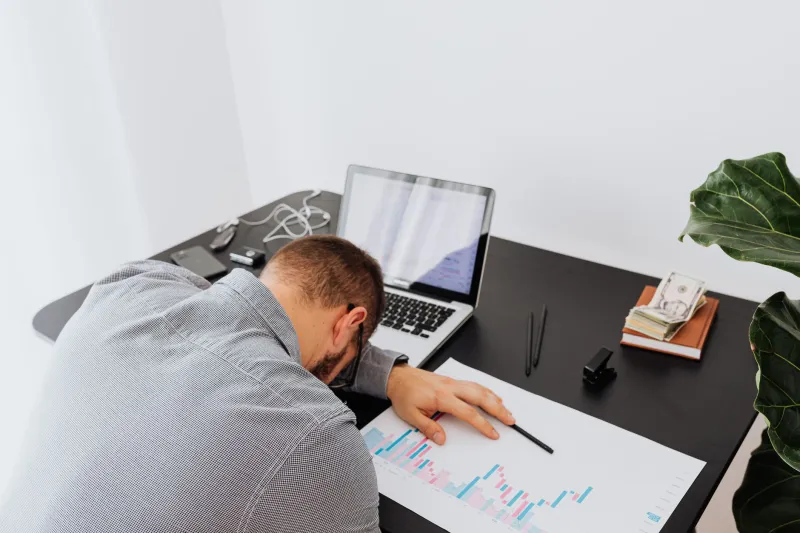
There is a particular kind of exhaustion that afflicts driven professionals—one that no productivity app, morning routine, or quarterly goal review can resolve. It does not announce itself as loneliness. It arrives instead as a creeping inability to concentrate, a shortened fuse, a growing indifference toward work that once felt urgent and meaningful. By the time most high achievers recognize what is happening, the damage has been compounding for months.
The uncomfortable truth is this: the very habits that define high-performance culture—deep focus, minimal distraction, relentless optimization—often create the conditions for a form of neurological and emotional depletion that has little to do with overwork and everything to do with human disconnection.
The Loneliness Paradox at the Center of Ambition
American professional culture has long romanticized the solitary grind. The image of the lone entrepreneur, the remote worker with noise-canceling headphones, the executive who gets up at 4:30 a.m. before the rest of the world is awake—these archetypes are celebrated precisely because they appear self-sufficient. Connection, in this worldview, is a luxury for those who have not yet mastered their own discipline.
But this framing misunderstands how the human nervous system actually functions. Researchers at the University of Chicago have demonstrated that perceived social isolation triggers the same threat-response pathways as physical danger. The brain, detecting a lack of social connection, elevates cortisol levels, activates inflammatory signaling, and shifts cognitive resources toward vigilance and threat detection. In practical terms, this means that a professional working in deliberate isolation is operating with a neurological profile more suited to survival than to creative problem-solving or sustained analytical output.
This is not a soft observation about feelings. It is a measurable shift in brain chemistry that degrades the very capacities—focus, memory consolidation, decision-making—that high achievers are trying to protect.
Why Remote Work Has Amplified the Problem
The widespread transition to remote and hybrid work arrangements has made this dynamic significantly worse for a large segment of the American workforce. Prior to 2020, even professionals who worked independently were embedded in ambient social environments—the incidental hallway conversation, the shared lunch, the background hum of other human beings at work. These low-stakes interactions, easy to dismiss as unproductive, were in fact providing a continuous baseline of social regulation that kept stress hormones in check.
Stripped of that ambient connection, many remote workers now spend the majority of their waking hours in near-total social isolation, broken only by scheduled video calls that research suggests are neurologically less satisfying than in-person interaction. The result is a population of professionals who are technically connected but physiologically isolated—and who are paying for that discrepancy in cognitive performance, emotional resilience, and physical health.
The American Psychological Association's most recent Stress in America report consistently identifies loneliness and social disconnection as among the most significant contributors to chronic stress in the country. What is less often discussed is how that chronic stress directly undermines the professional performance that these same individuals are sacrificing their social lives to protect.
The Body Keeps the Score—Literally
Chronic isolation does not remain confined to the emotional realm. It manifests in the body through sustained elevation of cortisol and adrenaline, suppression of immune function, disrupted sleep architecture, and increased systemic inflammation. Over time, these physiological changes create a feedback loop: the isolated professional feels worse, performs at a lower level, withdraws further from social engagement to compensate, and deepens the very isolation driving the decline.
Breaking this cycle requires more than scheduling more social activities. It requires addressing the physiological state directly—calming the nervous system, reducing cortisol, and restoring the parasympathetic tone that allows the body to shift out of chronic threat-response mode.
This is where ritualistic, sensory-focused self-care practices enter the conversation in a way that goes beyond lifestyle advice.
Why Ritualistic Self-Care Is Neurologically Different From Occasional Relaxation
There is a meaningful distinction between relaxation that happens to occur and relaxation that is deliberately structured into a daily or weekly routine. Neuroscientific research on habit formation and stress regulation suggests that predictable, sensory-rich rituals activate reward and safety circuitry in the brain in ways that spontaneous rest does not. The regularity itself is part of the mechanism: the nervous system learns to anticipate the calming experience, and begins downregulating stress hormones in advance of the ritual, not just during it.
Japanese wellness philosophy has understood this principle for centuries. The concept of katachi—the idea that disciplined form and ritual structure are themselves restorative—underlies practices from tea ceremony to the structured unwinding of an evening bath. The ritual is not incidental to the benefit; the ritual is the benefit.
This is why Japanese-engineered massage chairs represent something more significant than a convenience appliance. A daily session in a high-quality massage chair—with its systematic compression, rhythmic kneading, and full-body decompression—provides a predictable, sensory-rich experience that the nervous system can learn to associate with safety and recovery. For the isolated professional whose body has been locked in a low-grade stress state for hours or days, this is not a luxury indulgence. It is a targeted physiological intervention.
The Mechanism: How Massage Therapy Addresses the Neurobiology of Isolation
Physical touch is one of the most direct activators of oxytocin, the neurochemical most closely associated with social bonding and safety. Research published in journals including Psychoneuroendocrinology has confirmed that structured tactile stimulation—even in the absence of human contact—can produce measurable increases in oxytocin and corresponding reductions in cortisol. For individuals experiencing the biochemical signature of social isolation, this is a meaningful corrective.
Beyond oxytocin, the rhythmic pressure patterns employed by advanced massage chairs—particularly those utilizing shiatsu techniques derived from traditional Japanese practice—stimulate the vagus nerve, promoting parasympathetic nervous system activation. This shift from sympathetic dominance (the fight-or-flight state that chronic isolation sustains) to parasympathetic recovery is associated with reduced heart rate, lower blood pressure, improved digestion, and enhanced immune function. It is, in the most literal sense, a return to physiological equilibrium.
For the high achiever who has been running on cortisol and caffeine, this reset is not simply pleasant. It is the precondition for the cognitive clarity and emotional regulation that genuine high performance requires.
Building the Ritual That Rebuilds You
The practical application of this research is straightforward, though it requires a deliberate commitment that many driven professionals initially resist. The goal is not to add another optimization task to an already crowded schedule. It is to create a consistent, inviolable window—fifteen to thirty minutes, once or twice daily—in which the nervous system is given permission to recover.
A quality Japanese massage chair makes this possible without logistical complexity. Unlike spa appointments, meditation apps that require active mental effort, or social engagements that demand energy most isolated professionals do not currently have, a massage chair session is passive, immediate, and available on demand. The sensory experience is rich enough to satisfy the nervous system's need for input; the physical effects are measurable and cumulative.
Over time, this ritual does something that no productivity framework can replicate: it changes the baseline physiological state from which all work and decision-making emerges. The professional who spends thirty minutes each evening in structured physical recovery is not the same neurological entity the following morning as the one who did not.
Reclaiming Performance by Addressing What Optimization Ignores
High-performance culture will continue to generate sophisticated frameworks for time management, focus, and output measurement. What it has been slower to acknowledge is that human beings are not productivity machines with emotional needs as a secondary feature—they are social, sensory creatures whose cognitive and creative capacities are inextricably linked to their physiological and emotional state.
The loneliness epidemic among driven Americans is not a soft problem. It is a hard physiological reality with measurable consequences for the outcomes these individuals care most about. Addressing it requires more than scheduling coffee with a colleague. It requires building into daily life the kinds of sensory, ritualistic, body-focused practices that restore the nervous system to a state capable of genuine excellence.
For those committed to performing at their best while working in the conditions that modern professional life increasingly demands, a structured home wellness practice anchored by Japanese massage technology is not an indulgence. It is, increasingly, a strategic necessity.