The Forgotten Circulatory System: How a Sedentary America Is Quietly Undermining Its Own Immunity
The System Nobody Talks About Until Something Goes Wrong
Most Americans are reasonably familiar with the cardiovascular system. They monitor blood pressure, track resting heart rate, and understand—at least in general terms—that the heart pumps blood through a closed loop of vessels. What far fewer people appreciate is that the body runs a second circulatory network in parallel: the lymphatic system. And unlike its better-known counterpart, this one operates without a central pump.
The lymphatic system is a sprawling infrastructure of vessels, nodes, and organs responsible for collecting excess interstitial fluid, filtering cellular waste, transporting immune cells, and absorbing dietary fats from the digestive tract. It is, in essence, the body's internal sanitation and defense network. When it functions optimally, you rarely notice it. When it doesn't, the consequences accumulate quietly—chronic fatigue, persistent puffiness, sluggish immunity, and a general sense of heaviness that is difficult to articulate and even harder to diagnose.
For a growing number of Americans, that quiet dysfunction has become the norm.
Why Movement Is Non-Negotiable for Lymphatic Health
The lymphatic system moves fluid through one primary mechanism: the mechanical compression of surrounding tissues. Every time a muscle contracts, a joint flexes, or the diaphragm expands during a deep breath, lymphatic vessels are gently squeezed, propelling fluid forward through a series of one-way valves toward the lymph nodes and, ultimately, back into the bloodstream.
This design works exceptionally well for a body that moves consistently throughout the day. It was not designed for a body that sits motionless for eight to ten hours at a desk, commutes in a car, and then reclines on a couch until bedtime.
Sedentary behavior effectively stalls lymphatic flow. Without the rhythmic muscular contractions that act as a biological pump, interstitial fluid pools in the tissues. Cellular metabolic byproducts—carbon dioxide, lactic acid, inflammatory proteins—accumulate rather than being efficiently cleared. Immune cells, which rely on lymphatic transport to reach sites of infection or injury, are slower to mobilize. The result is a system that is technically intact but functionally compromised.
Research published in peer-reviewed physiology journals has consistently demonstrated that even moderate reductions in daily physical activity measurably impair lymphatic clearance rates. In a country where the Centers for Disease Control and Prevention estimates that fewer than one in four adults meets recommended physical activity guidelines, the scale of this problem is difficult to overstate.
The Connection Between Stagnant Lymph and Chronic Fatigue
One of the most underappreciated consequences of poor lymphatic function is its contribution to persistent fatigue—the kind that sleep does not fully resolve. When metabolic waste products are not efficiently cleared from tissues, cells operate in an increasingly toxic microenvironment. Mitochondrial efficiency declines. Inflammatory signaling increases. The immune system, perpetually occupied with managing low-grade cellular debris rather than responding to acute threats, becomes both overburdened and less effective.
Many individuals experiencing these symptoms cycle through explanations—poor diet, insufficient sleep, work stress—without ever considering that their lymphatic system may be quietly struggling beneath the surface. The fatigue is real. The cognitive fog is real. But the root cause remains invisible precisely because the lymphatic system does not announce its distress the way an aching joint or elevated blood pressure might.
This is what makes lymphatic health both so important and so chronically neglected in mainstream American wellness discourse.
Where Japanese Shiatsu Technique Enters the Conversation
Traditional Japanese shiatsu practice has, for centuries, incorporated an understanding of the body's fluid systems that anticipates much of what modern physiology has since confirmed. Shiatsu practitioners work along defined meridian pathways—channels understood in Eastern medicine as conduits for vital energy—applying rhythmic, graduated pressure to stimulate circulation and restore systemic balance.
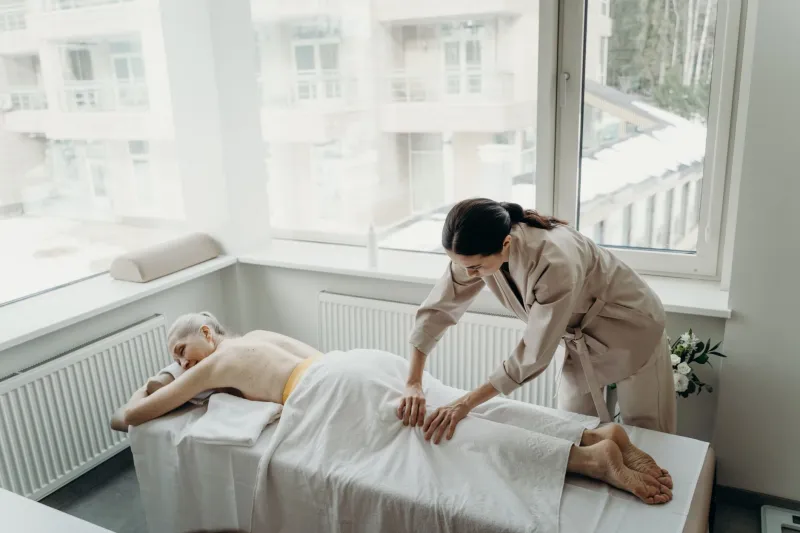
From a Western physiological perspective, what this pressure application achieves is the mechanical compression of soft tissue that the lymphatic system requires to function. Sustained, directional pressure along the body's major lymphatic pathways—the neck, axillary region, abdomen, and inner thighs, among others—manually propels lymph fluid in ways that sedentary muscles cannot. It is, in effect, a substitute for the movement the modern lifestyle has eliminated.
Japanese massage chair engineering has translated this centuries-old manual technique into a precise, repeatable mechanical system. High-quality chairs from Japanese manufacturers incorporate multi-dimensional roller mechanisms capable of replicating the nuanced pressure gradients of skilled shiatsu practice. Body-scanning technology maps individual spinal contours and adjusts roller positioning accordingly, ensuring that pressure is applied along anatomically accurate pathways rather than approximated by a one-size-fits-all mechanism.
Airbag compression systems—a feature standard in premium Japanese designs but often absent or rudimentary in lower-tier Western alternatives—extend this stimulation to the limbs, calves, and feet, areas where lymphatic stagnation is particularly common and particularly consequential for overall circulatory health.
Building a Lymphatic Health Practice at Home
The clinical literature on manual lymphatic drainage—a specialized massage modality developed in Europe in the 1930s—consistently demonstrates meaningful improvements in immune function, tissue fluid balance, and fatigue levels among regular recipients. The practical barrier has historically been access: sessions with trained therapists are expensive, scheduling-dependent, and geographically constrained.
A quality Japanese massage chair dissolves that barrier. Positioned in a home office, living room, or dedicated wellness space, it enables consistent, daily mechanical stimulation without appointment logistics or cumulative session costs. For individuals managing chronic fatigue, recovering from illness, or simply attempting to counteract the physiological toll of a desk-bound profession, this accessibility is not a minor convenience—it is the difference between a practice that actually happens and one that remains an intention.
The optimal approach involves sessions of fifteen to thirty minutes, ideally in the early evening when the body is transitioning from active to restorative mode. Hydration before and after sessions supports lymphatic fluid movement. Diaphragmatic breathing during the massage—slow, deliberate inhales that expand the lower abdomen—amplifies the mechanical effect by engaging the thoracic duct, the lymphatic system's primary drainage channel.
A System Worth Investing In
The lymphatic system will not send an alert when it is struggling. It will not produce a number on a dashboard or trigger a notification on a wearable device. It operates in silence, and it declines in silence—until the downstream consequences become impossible to ignore.
For Americans navigating the health compromises of modern sedentary life, that silence is precisely the problem. Addressing lymphatic health requires deliberate intervention: consistent movement, adequate hydration, and, increasingly, the kind of targeted mechanical stimulation that Japanese massage chair technology is uniquely equipped to provide.
At Kosei Massage Chair, our editorial commitment is to surface the health conversations that do not always make front pages but matter profoundly to long-term wellbeing. The lymphatic system's quiet crisis is one of them. The tools to address it, fortunately, have never been more accessible.

