When Your Brain Is Too Wired to Wind Down: The Involuntary Path to Deep Calm
If you have ever sat cross-legged on a meditation cushion, eyes closed, diligently attempting to clear your mind—while your mind methodically generated a comprehensive list of everything that needed your attention—you have encountered one of the more frustrating paradoxes in modern wellness.
The people who most need to relax are frequently the people least capable of doing so on command. And the harder they try, the further the goal recedes.
This is not a character flaw. It is neuroscience. And understanding it changes everything about how you approach recovery.
The Effort Problem in Relaxation
Conventional stress-management advice rests on a foundational assumption: that relaxation is a skill, and that applying sufficient mental effort to its practice will produce the desired physiological state. Deep breathing, progressive muscle relaxation, guided visualization, positive affirmations—all of these techniques share the same structural premise. The mind is directing the body toward calm.
For many people in moderate-stress situations, this works adequately. The nervous system is not so activated that voluntary techniques cannot gain purchase. The parasympathetic response—the body's rest-and-digest mode—is accessible through deliberate practice.
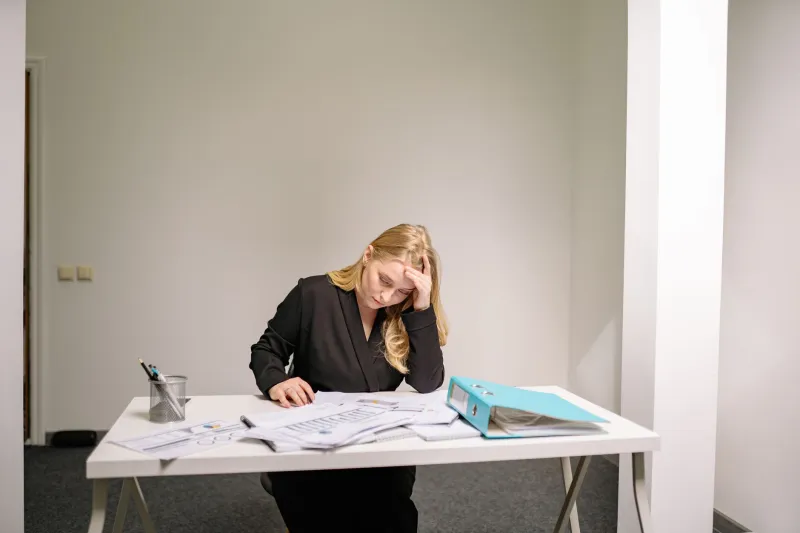
But for individuals operating under sustained high cognitive load—the executive managing a demanding organization, the physician navigating a complex patient roster, the entrepreneur whose business never fully stops—the nervous system is often in a state of chronic sympathetic activation that voluntary techniques struggle to penetrate. The brain is generating beta and high-beta wave activity associated with focused alertness. Asking it to simply shift into alpha-wave relaxation through intention is a bit like asking a sprinter to instantly drop into a walking pace by deciding to do so.
The instruction is reasonable. The physiology does not cooperate.
The Vagus Nerve and the Limits of Top-Down Control
The vagus nerve is the primary conduit of the parasympathetic nervous system—the biological infrastructure of calm. It runs from the brainstem through the thorax and into the abdomen, innervating the heart, lungs, and digestive organs. When it is well-toned and appropriately activated, it produces the physiological signature of relaxation: reduced heart rate, lower cortisol, improved digestive function, and a subjective sense of ease.
Most conventional relaxation techniques attempt to activate the vagus nerve through top-down control—using the higher cortical brain to send signals downward through the nervous system hierarchy. This approach has merit, and the research on practices like diaphragmatic breathing is legitimate. Slow, controlled breathing does shift autonomic tone toward parasympathetic dominance.
But top-down control has a fundamental limitation for highly activated individuals: the prefrontal cortex—the seat of deliberate thought and executive function—is itself metabolically expensive and attention-hungry. When it is already occupied with the cognitive demands that characterize a high-stress professional life, asking it to simultaneously manage a relaxation protocol is asking it to do two cognitively expensive things at once. The relaxation effort competes with the stress, rather than resolving it.
Japanese wellness philosophy evolved a different answer to this problem—one that operates from the bottom up rather than the top down.
Bottom-Up Activation: Why Rhythmic Pressure Bypasses the Thinking Brain
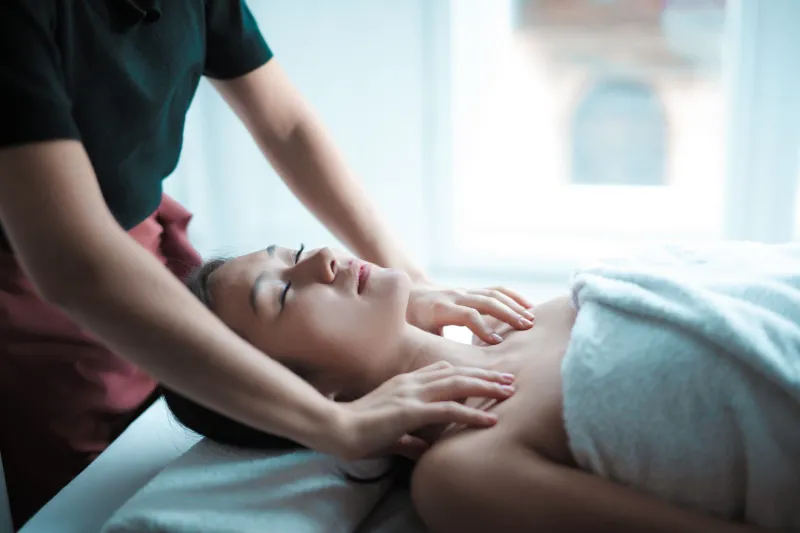
The body's sensory periphery connects to the vagus nerve and the broader autonomic nervous system through pathways that do not require cortical mediation. Mechanoreceptors in the skin, fascia, and muscle tissue respond to pressure, vibration, and rhythmic input by sending signals directly into the autonomic regulatory network—without asking the thinking brain's permission.
This is the physiological basis of why skilled touch produces relaxation even in individuals who cannot achieve it through deliberate effort. The signal does not travel through the prefrontal cortex. It enters the nervous system at a lower level, where it can modulate autonomic tone without competing with active cognitive processing.
Shiatsu—the Japanese manual therapy tradition that informs the engineering philosophy behind high-quality massage chairs—was developed with an intuitive understanding of this principle long before neuroscience had the vocabulary to describe it. The rhythmic application of pressure along specific meridian pathways, the cadenced alternation of compression and release, the systematic progression from peripheral to central body zones: these are not arbitrary choices. They represent centuries of empirical refinement of a bottom-up approach to nervous system regulation.
A well-engineered Japanese massage chair translates these principles into mechanical form. The roller sequences that travel the paraspinal muscles, the oscillating airbag compression systems that address the limbs and shoulders, the rhythmic kneading nodes that replicate the cadence of skilled manual pressure—these deliver a consistent, patterned sensory input that the autonomic nervous system processes as a signal to downregulate sympathetic tone.
Critically, this happens without requiring mental effort from the person receiving it. The thinking brain can remain active, even occupied, while the body's autonomic systems receive and respond to the mechanical input. For the high-achieving professional whose mind cannot easily be stilled, this is not a minor advantage. It is the difference between a relaxation technique that works and one that does not.
Why Western Approaches Missed This
Western medicine's engagement with stress and the nervous system developed primarily through a cognitive and pharmacological lens. The dominant frameworks—from psychotherapy to anxiolytic medication—either address the mental content of stress or chemically alter neurotransmitter availability. The body's peripheral sensory pathways as a route to autonomic regulation received comparatively little attention until relatively recently.
Japanese wellness culture, by contrast, developed within a tradition that treated the body as the primary site of intervention for states that Western medicine would categorize as psychological. The bath rituals, the manual therapy traditions, the emphasis on physical environment as a determinant of internal state—all of these reflect a bottom-up model of wellbeing that the neuroscience of interoception and autonomic regulation is now validating in considerable detail.
The practical consequence for American consumers is significant. If you have attempted meditation, breathing exercises, or other cognitive relaxation techniques and found them ineffective or frustrating, it does not mean you are beyond help. It may simply mean you have been using a top-down tool for a problem that requires a bottom-up solution.
The Case for Making Recovery Effortless
There is a final dimension to this that deserves direct acknowledgment. For individuals who are already cognitively depleted by the demands of a high-performing professional life, the additional cognitive load of a deliberate relaxation practice—however modest—represents a real barrier to consistency.
A massage chair requires nothing. You sit in it. The mechanical sequences begin. The autonomic response follows, not because you directed it to, but because the body's sensory pathways responded to rhythmic mechanical input in the way they are physiologically designed to respond.
Consistency, in any wellness practice, is the primary determinant of outcome. A technique that requires effort will be applied inconsistently by people whose effort is already maximally allocated. A technique that requires nothing—that delivers its benefit passively, during the twenty minutes you would otherwise spend scrolling—will be used daily.
For a nervous system that cannot be talked into calm, that may be the most important consideration of all.