Silent and Stagnant: What Happens to Your Body's Drainage Network When You Sit Too Long—and How Rhythmic Massage Gets It Moving Again

A System That Cannot Help Itself
The human body is remarkable in its redundancy. The heart beats without instruction. The lungs inflate without conscious effort. But one critical network—the lymphatic system—operates under a fundamentally different arrangement. It has no central pump. It relies entirely on the mechanical forces generated by muscular contraction, breathing, and body movement to circulate its fluid through roughly 600 to 700 nodes scattered throughout the body.
This dependency is not a design flaw. For most of human history, the near-constant physical activity of daily life provided all the stimulation the lymphatic system required. The problem is that human history, for most Americans today, looks nothing like it once did.
When the body is sedentary for hours at a stretch—seated at a desk, reclined on a couch, or confined to a car during a long commute—lymphatic circulation slows dramatically. Fluid that should be moving through vessels and nodes begins to pool. Waste products that should be filtered and expelled linger in the tissues. The consequences, while rarely dramatic in the short term, accumulate in ways that compromise both immune function and overall physical comfort.
What the Lymphatic System Actually Does
To understand why stagnation matters, it helps to understand what lymph does when it is moving correctly.
Lymphatic fluid is essentially a recycled byproduct of the cardiovascular system. As blood circulates through capillaries, plasma leaks into surrounding tissues to deliver oxygen and nutrients to cells. Most of this fluid re-enters the bloodstream directly, but roughly 10 percent does not. Instead, it is collected by lymphatic capillaries, filtered through lymph nodes—where pathogens, cellular debris, and abnormal cells are identified and neutralized—and eventually returned to the bloodstream via the thoracic duct near the collarbone.
This process performs several essential functions simultaneously. It removes metabolic waste and cellular debris from tissues. It transports immune cells, particularly lymphocytes, to sites of infection or injury. It absorbs dietary fats from the digestive tract. And it maintains fluid balance throughout the body, preventing the tissue swelling known as edema.
When this circulation slows, each of these functions is compromised. Waste accumulates. Immune surveillance weakens. Tissues retain excess fluid. The body, in a very literal sense, becomes less capable of cleaning itself.
The Sedentary Penalty
Research into lymphatic physiology has consistently demonstrated the system's dependence on physical activity. Studies examining lymphatic flow rates have found that exercise can increase lymph transport by as much as ten to thirty times above resting levels, driven primarily by the rhythmic compression and relaxation of skeletal muscles surrounding lymphatic vessels.
The inverse is equally well documented. Prolonged immobility—the kind that characterizes a standard American workday—reduces lymphatic flow to its minimum functional rate. For individuals who spend eight or more hours seated, with limited movement breaks, this translates to extended periods during which metabolic byproducts accumulate in muscle tissue, inflammatory markers remain elevated, and the immune system operates with reduced efficiency.
This is not a theoretical concern. Clinicians who work with lymphedema patients—a condition defined by severe lymphatic obstruction—have long understood that even modest improvements in lymphatic flow yield measurable benefits in tissue health and immune response. The sedentary individual without a clinical diagnosis is simply experiencing a milder version of the same underlying dynamic.
Why Traditional Advice Falls Short
The conventional prescription for lymphatic health is straightforward: move more. Walk, swim, practice yoga, engage in deep diaphragmatic breathing. All of these recommendations are physiologically sound. All of them stimulate lymphatic circulation through the same basic mechanism—muscular contraction compressing lymphatic vessels and propelling fluid forward through one-way valves.
But for a significant portion of the American population, consistent daily movement remains elusive. Long work hours, physical limitations, chronic fatigue, and the cumulative inertia of sedentary habits create real barriers to the kind of sustained activity that would meaningfully support lymphatic function. Telling a desk worker who finishes a ten-hour shift exhausted to immediately engage in vigorous exercise is advice that, however medically accurate, often goes unheeded.
This is where mechanical intervention becomes relevant—not as a replacement for physical activity, but as a practical complement to it.
The Mechanical Case for Massage
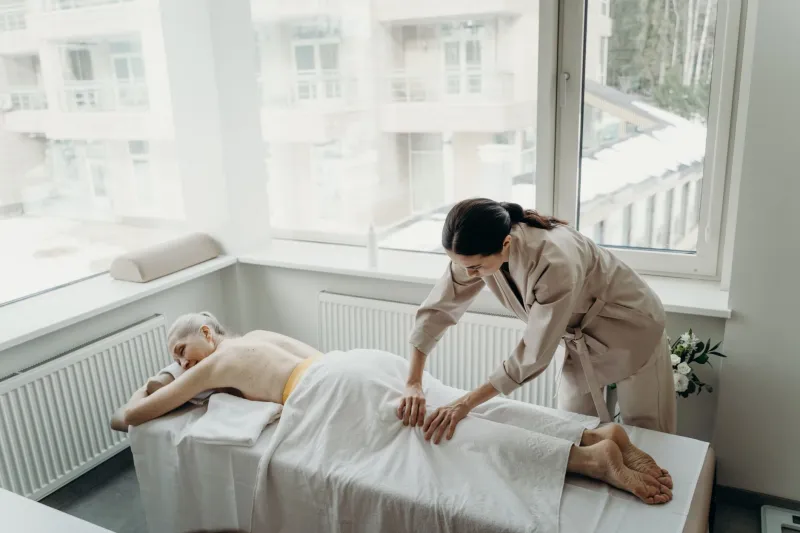
Rhythmic mechanical pressure applied to soft tissue replicates, in meaningful ways, the compressive forces that muscular movement generates on the lymphatic system. When pressure is applied and released in a cyclic pattern, it creates a pumping effect on the lymphatic vessels embedded in and beneath the skin, encouraging fluid to move through the network toward lymph nodes.
This is the physiological basis for manual lymphatic drainage, a specialized massage technique developed in the 1930s by Danish physicians Emil and Estrid Vodder and now widely used in clinical settings to manage lymphedema and post-surgical swelling. The technique involves light, rhythmic strokes applied in the direction of lymphatic flow, designed specifically to stimulate vessel contraction and accelerate drainage.
High-quality Japanese massage chairs incorporate several features that engage similar mechanisms. Air compression systems—particularly those that envelop the legs, calves, and feet—apply sequential, wave-like pressure that closely approximates the pumping action of manual lymphatic drainage. Kneading and rolling mechanisms along the back and shoulders stimulate the deeper lymphatic vessels of the torso. Full-body programs that combine these elements with percussive and stretching functions create a comprehensive mechanical stimulus that the lymphatic system recognizes and responds to.
Japanese engineering, in particular, has long prioritized the precise calibration of pressure, rhythm, and coverage area in ways that distinguish these products from simpler Western alternatives. The attention to biomechanical detail that defines manufacturers in Japan reflects a broader cultural emphasis on the body as a system requiring regular, deliberate maintenance—a philosophy that aligns naturally with what lymphatic physiology actually demands.
Practical Implications for the American Household
For the average American adult spending the majority of waking hours in a seated position, the lymphatic implications are not abstract. They manifest as the persistent heaviness in the legs at the end of a workday. The facial puffiness that appears after a long flight. The recurring mild fatigue that no amount of sleep seems to fully resolve. The frequency of minor illnesses during high-stress, low-movement periods.
None of these symptoms are inevitable. They are, in large part, the predictable consequences of a system that has been deprived of the mechanical stimulation it requires to function.
A daily session in a quality massage chair—particularly one that incorporates lower-body air compression and full-torso massage—provides a reliable, accessible means of delivering that stimulation. For individuals who cannot maintain consistent exercise routines, or who need additional support on top of existing activity, it represents a meaningful and evidence-informed addition to a home wellness practice.
Restoring What Stillness Takes Away
The lymphatic system does not ask for much. It asks, essentially, to be moved. For most of human existence, that was a condition that took care of itself. In the modern American context, it requires deliberate attention.
Understanding the physiology—the dependence on mechanical force, the consequences of stagnation, the responsiveness to rhythmic compression—is the first step toward addressing it. Acting on that understanding, with tools designed specifically to meet the body's needs in a sedentary world, is the second.
The goal is not to compensate for an unhealthy lifestyle. It is to support the body's own sophisticated infrastructure in doing what it was designed to do—efficiently, quietly, and without interruption.