Your Immune System Has an Inflammation Problem—and Mechanical Massage May Be the Missing Intervention
America has developed a complicated relationship with immunity. Walk into any pharmacy or health food store and you will find entire sections devoted to supplements, adaptogens, and immune-boosting formulas. The market for these products has expanded dramatically over the past decade, driven by a growing public awareness that the body's defense system is under pressure from modern life. Yet despite billions spent on capsules and powders, chronic inflammation continues to be one of the most pervasive and underacknowledged health threats facing adults in the United States.
The reason supplements alone fall short is not that they are without merit. It is that they address only one dimension of a problem that is fundamentally systemic. Inflammation is not simply a nutrient deficiency. It is, in large part, a physiological response to how we live—how we move, how we recover, and how effectively our bodies are able to regulate their own internal signaling systems. That is where the conversation about mechanical massage, and specifically the precision-engineered techniques found in Japanese massage chair technology, becomes genuinely compelling.
Understanding the Inflammation-Immunity Loop
To appreciate why massage therapy matters immunologically, it helps to understand the relationship between inflammation and immune function at a basic level. Inflammation is not inherently harmful. Acute inflammation is, in fact, a critical component of the immune response—it signals the body to deploy white blood cells, increase circulation to affected tissues, and initiate repair. The problem arises when inflammation becomes chronic, persisting at low levels across the body without a clear injury or infection to address.
Chronic low-grade inflammation has been associated with suppressed immune surveillance, meaning the body becomes less efficient at identifying and neutralizing genuine threats such as pathogens or abnormal cells. It also correlates with elevated cortisol levels, disrupted sleep, and a sustained activation of the sympathetic nervous system—the branch of the autonomic nervous system responsible for the fight-or-flight response. When the body remains locked in this state of low-level alert, the immune system's resources are perpetually diverted, leaving less capacity for the kind of adaptive, targeted defense that keeps people healthy over time.
The Parasympathetic Pathway: Where Massage Enters the Picture
One of the most significant physiological effects of consistent massage therapy is its activation of the parasympathetic nervous system—the counterpart to the sympathetic system, often described as the body's "rest and digest" mode. When the parasympathetic nervous system is engaged, cortisol levels decrease, heart rate slows, and the body shifts resources toward repair, digestion, and immune regulation.
Research published in peer-reviewed journals, including work from institutions such as Cedars-Sinai Medical Center, has demonstrated that even a single session of Swedish massage produced measurable changes in immune-related blood markers, including reductions in arginine vasopressin, a hormone associated with aggressive behavior and elevated cortisol. More significantly, participants showed increases in lymphocytes—the white blood cells that play a central role in the body's adaptive immune response.
Japanese massage traditions, including shiatsu and anma, have long emphasized the connection between pressure application along specific pathways and the body's internal regulatory systems. Modern Japanese massage chair engineering has translated these principles into programmable, repeatable mechanical sequences that can deliver consistent therapeutic pressure across the full length of the spine and into the peripheral tissues—without the variability inherent in manual therapy.
Lymphatic Flow and the Cellular Drainage System
The lymphatic system is the body's internal drainage and surveillance network. Unlike the cardiovascular system, it has no central pump. Lymph fluid moves through the body primarily via muscular contraction and physical pressure. When people are sedentary—as the majority of American desk workers are for six to ten hours each day—lymphatic circulation slows considerably. Stagnant lymph means reduced transport of immune cells, slower removal of cellular waste, and a diminished capacity to mount an effective immune response.
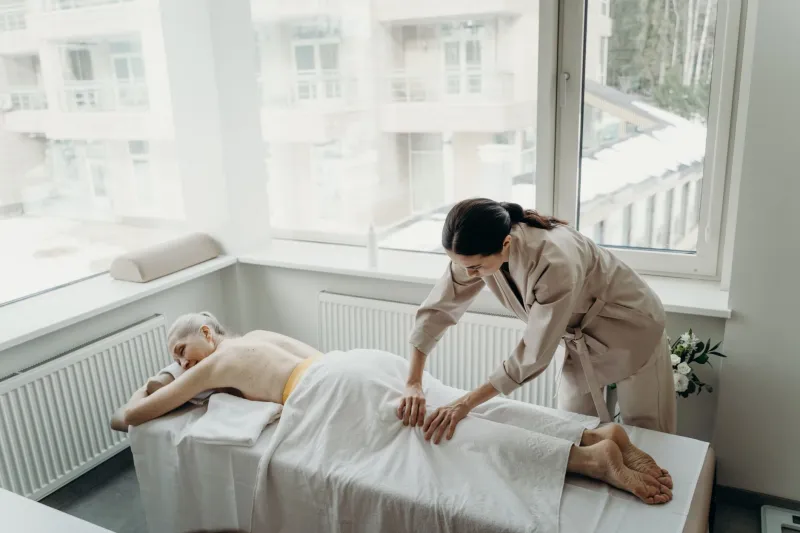
Mechanical massage addresses this directly. The rolling, kneading, and compression sequences built into high-quality Japanese massage chairs create rhythmic pressure gradients throughout the soft tissues of the back, legs, and extremities. This mechanical stimulation mimics the effect of movement and manual therapy on lymphatic vessels, encouraging fluid to move through the nodes where immune screening occurs. The result is not merely comfort—it is a functional improvement in one of the body's primary immune infrastructure systems.
Air compression technology, a feature standard in many premium Japanese massage chair models, is particularly effective in this regard. By applying sequential pressure to the limbs and torso, these systems actively support lymphatic return from the extremities toward the central lymph nodes, replicating the physiological effect of graduated compression therapy used in clinical settings.
Inflammatory Markers and What the Research Suggests
The scientific literature on massage and inflammation, while still developing, offers meaningful signals. Studies have shown that massage therapy can reduce serum levels of cytokines—proteins that regulate inflammation—including interleukin-6 (IL-6) and tumor necrosis factor-alpha (TNF-α), both of which are elevated in states of chronic inflammation. A study published in the Journal of Alternative and Complementary Medicine found that massage reduced IL-6 levels in participants following exercise-induced muscle damage, a context that mirrors the everyday inflammatory burden carried by physically active or physically stressed individuals.
For Americans dealing with the compounded stressors of demanding work schedules, poor sleep hygiene, and insufficient physical recovery time, these findings are not trivial. They suggest that regular mechanical massage is not a luxury indulgence but a potentially meaningful intervention in the body's inflammatory regulatory processes.
Building a Preventative Wellness Practice at Home
The challenge with any therapeutic modality is consistency. Scheduling weekly appointments with a licensed massage therapist is beyond the practical reach of most Americans, both financially and logistically. This is precisely where the value proposition of a home massage chair becomes most apparent—not as a substitute for medical care, but as a tool for building the kind of regular, repeatable practice that produces cumulative physiological benefit.
Japanese massage chair manufacturers have invested decades of engineering refinement into recreating the nuanced pressure dynamics of traditional manual therapy. The result is a category of wellness furniture that can deliver clinically meaningful mechanical stimulation on a daily basis, within the rhythm of a normal household routine. A fifteen- to twenty-minute session in the evening, for instance, can serve as a consistent parasympathetic activation signal—telling the body to downregulate its stress response, restore lymphatic movement, and redirect resources toward immune maintenance.
For Americans who are increasingly aware of the inadequacy of reactive healthcare—treating illness after it occurs rather than maintaining the conditions that prevent it—this represents a meaningful shift in how wellness infrastructure is designed and used at home.
The Case for Viewing Your Massage Chair as Immune Support
The supplement industry has done an effective job of positioning immunity as something you can purchase in a bottle. The reality is more complex and, in many ways, more empowering. The immune system is not a passive entity waiting to be fortified by external inputs. It is a dynamic, responsive network that performs best when the body's physiological environment supports it—when inflammation is regulated, when the lymphatic system is moving freely, and when the nervous system has adequate recovery time.
Regular mechanical massage, delivered through precision-engineered Japanese technology, addresses each of these conditions directly. It is not a replacement for sound nutrition, adequate sleep, or appropriate medical care. But as a component of a thoughtful, preventative wellness practice, it offers something that no capsule can replicate: a consistent, physiologically grounded intervention that works with the body's own regulatory systems rather than attempting to supplement around them.
For those serious about long-term immune resilience, the question may not be which supplement to add next—but whether the daily infrastructure of recovery and regulation is truly in place.